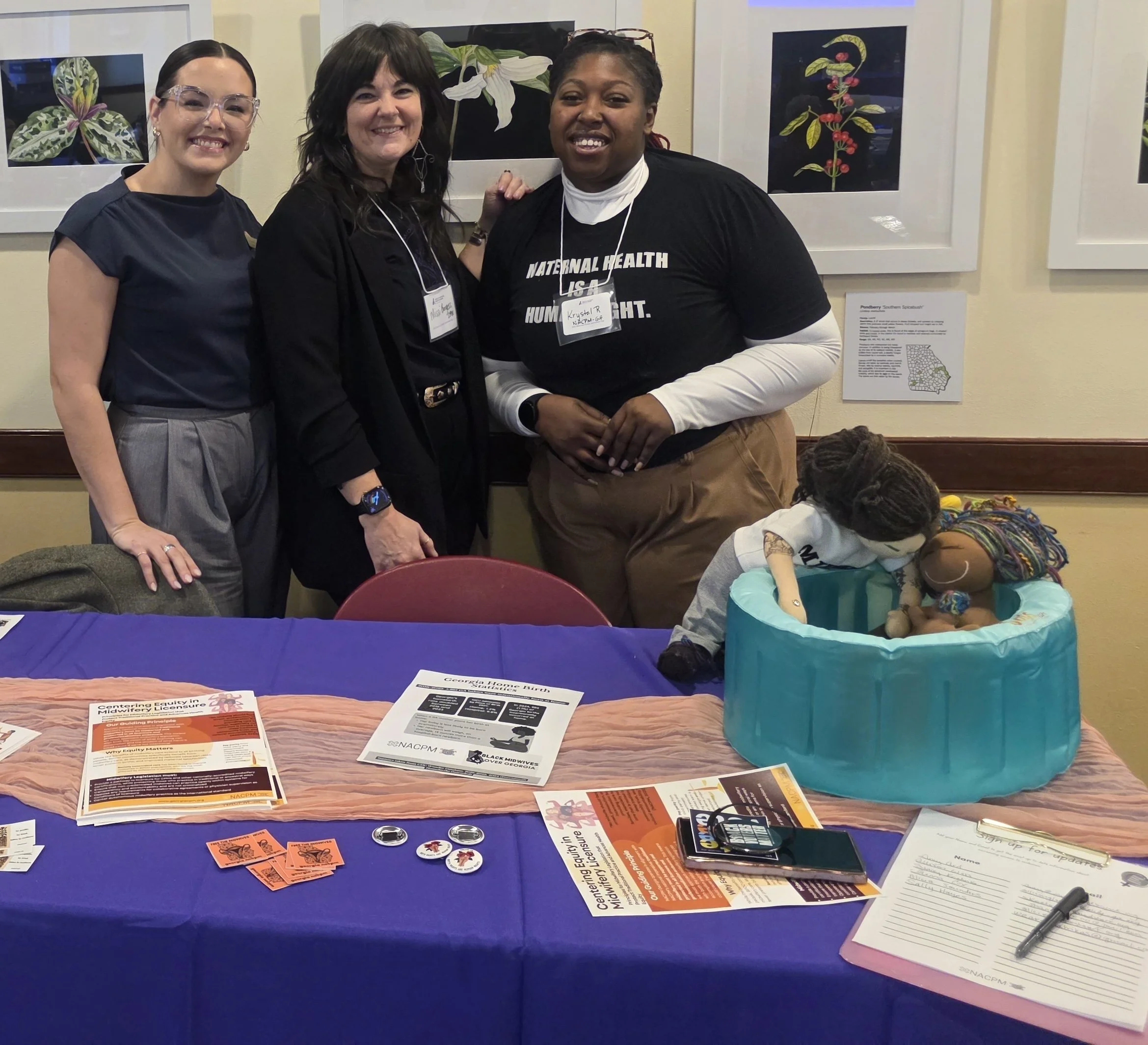
A Seat at the Table: Reflections from Maternal Health Awareness Day at the Georgia State Capitol
On Maternal Health Awareness Day, NACPM Georgia had the profound privilege of participating in an event at the Georgia State Capitol sponsored by Healthy Mothers, Healthy Babies Georgia. To the organizers who ensured that midwives had a seat at this critical conversation—we are deeply grateful. Being invited to the table is the first step toward the systemic change Georgia's mothers and babies desperately need.
What made this moment even more significant was the unity in the room: all three midwifery organizations in Georgia were present and standing together—the Georgia Affiliate of ACNM, NACPM Georgia, and Black Midwives Over Georgia. When midwives speak with one voice across our diverse professional pathways and communities, that voice becomes impossible to ignore.
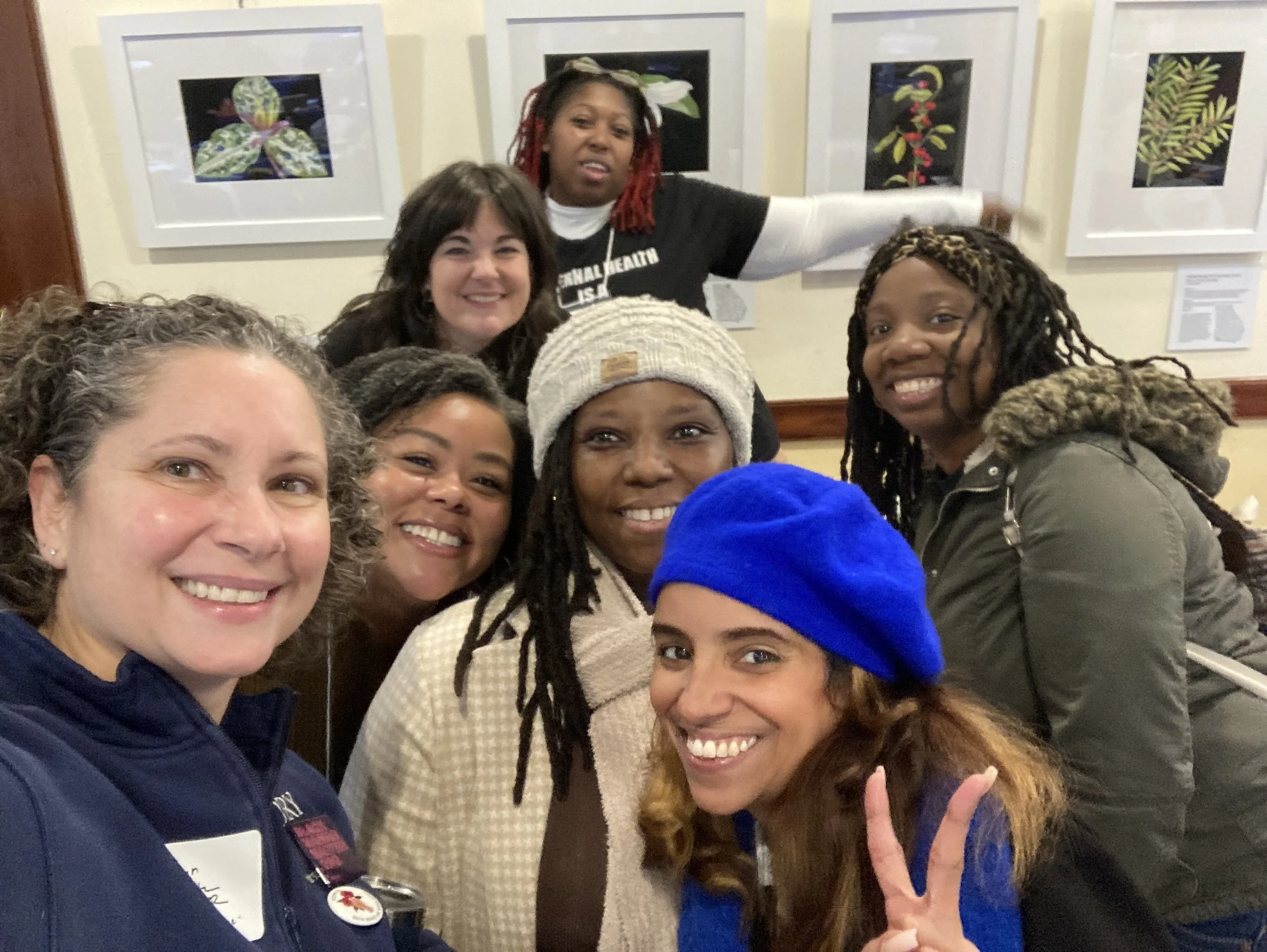
The State of Maternal Health in Georgia: A System Under Strain
The expert panel discussion painted a sobering picture of our state's maternal health crisis. We heard about counties without OB providers, where unqualified staff are forced to triage obstetric emergencies. We listened as healthcare leaders described an infrastructure buckling under pressure. Tiffany Bryant from Wellstar articulated what many are experiencing: "Our infrastructure is burdened."
The concerns raised were valid and urgent. Rural families face the compounding stress of traveling great distances for care—stress that itself becomes a driver of complications and poor outcomes. The need for workforce investment, particularly in underserved areas, was a recurring theme. We need providers where families are, not forcing families to travel hours to where providers happen to be.
Several panelists offered important solutions: doula reimbursement through Medicaid and private insurance at living wages, expanded telehealth with paramedicine support, inclusion of prenatal-to-postpartum care in reimbursement models, and triage protocols for facilities receiving pregnant patients. Jennifer Rutledge specifically mentioned "expansion of the role of midwives." Laura McCormick from Prenatal-to-3 Policy Impact Center reminded us that "maternal health is not that one day in the delivery room"—it requires support beyond the hospital walls. Rae-Anne Pickney raised the practical barrier of WiFi access for rural telehealth delivery.
Healthcare professionals are doing their absolute best within a system that is failing them and the families they serve. Our physicians and hospitals are overtaxed, under-resourced, and struggling to meet the needs of Georgians. They deserve our support and our partnership in creating better solutions.
The Moment That Revealed the Gap
Then came a question that exposed the fundamental gap in understanding—a question from a rural mother in the audience that stopped the conversation cold.
What happens when a community midwife or doula is practicing in a rural area without hospital backup hours away?
The expert panelists were, by their own admission, dumbfounded. They had no answer. The very providers they had just recommended expanding—midwives—were not understood well enough to answer a basic question about how they function in the communities that need them most.
From the audience, student midwife Krystal Reese stood and provided what should have come from the panel:
Midwives are trained health professionals who can triage complications, stabilize patients for transport, and know precisely when care needs to be escalated to a higher level. This is our scope. This is our training. This is what we do.
Honoring Legislative Champions
We were honored to hear from several legislative leaders committed to maternal health. Rep. Darlene Taylor was recognized for her work on the Community Health Worker bill. Rep. Lisa Campbell spoke of wanting "the highest quality of care in the nation for Georgia families." Representative Jasmine Clark beautifully articulated that policy should work together like the organs of the body do.
Rep. Clark's words about policy working together like organs in a body resonated deeply. But here's the truth: in the body of maternal healthcare, midwives are not a supplementary organ. We are part of the circulatory system—we should be flowing through every conversation, every policy discussion, every solution proposed.
Midwives Should Be Leading This Conversation
It is not lost on us that during a discussion about maternal health solutions, when doulas were mentioned multiple times and midwives were referenced as part of expanded care models, the panelists—despite their expertise in other areas—could not answer a fundamental question about how community-based maternity care providers function.
This is not a criticism of the individuals on that panel. This is an indictment of a system that has marginalized midwifery care for so long that even well-intentioned healthcare leaders do not fully understand the Midwives Model of Care.
The Midwives Model of Care is not just another option to mention in passing. It is the evidence-based framework that changes outcomes.
When panelist Laura McCormick spoke about needing a shift in how we train people to understand that maternal health extends beyond the delivery room, she was describing—whether she knew it or not—the Midwives Model of Care. Continuity of care. Community-based support. Physiologic birth. Individualized, relationship-based care that honors the entire childbearing year. This is not aspirational; this is what midwives already do.
When panelists spoke about building patient trust, providing advocacy, and coordinating care on many levels, they were describing what happens when a midwife walks alongside a family through pregnancy, birth, and postpartum. When they spoke about being open to the support and care that individuals desire, they were describing informed choice and shared decision-making—cornerstones of midwifery practice.
Midwives should not be a mention. We should be leading this conversation.
Our Commitment to Georgia
As Mr. Rogers said, and as the Tyrone Law Firm reminded us that day: "When you see something scary, look for the helpers."
Georgia's maternal health crisis is terrifying. The statistics are scary. The stories are heartbreaking. The disparities are unconscionable.
But the helpers are here. Midwives have been here. We have been in communities, in homes, in birth centers, providing the kind of care that prevents the very emergencies that overwhelm our hospitals. We have been stabilizing complications, making appropriate referrals, collaborating with physicians, and catching families that the traditional healthcare system has let fall through its cracks.
NACPM Georgia is committed—with every fiber of our professional being—to ensuring that midwifery-led care becomes not just an option but a cornerstone of maternal healthcare in Georgia. We are committed to educating policymakers, healthcare leaders, and community members about what midwives do and how the Midwives Model of Care transforms outcomes. We are committed to building the infrastructure, the policy frameworks, and the collaborative relationships that will allow midwives to practice to the full scope of our training in service of Georgia families.
And we are grateful to stand shoulder to shoulder with our colleagues from the Georgia Affiliate of ACNM and Black Midwives Over Georgia. Together, we represent the full spectrum of midwifery in Georgia—Certified Nurse-Midwives, Traditional Midwives, and Certified Professional Midwives—united in our commitment to the families we serve and the profession we love.
An Invitation
To every legislator, healthcare administrator, payer, policy advocate, and community leader who truly wants to see maternal health improve in Georgia: we want to talk with you.
Not to be mentioned in your panel discussions. Not to be added as an afterthought to your policy proposals. But to sit down as the maternal health experts we are and to work together to build a system where every Georgia mother has access to the kind of care that respects her autonomy, honors her body's wisdom, and provides the clinical excellence she deserves.
Midwifery care is not experimental. It is evidence-based, cost-effective, and outcome-improving. The research is clear. The international models are proven. The question is not whether midwifery-led care works—it is whether Georgia will have the courage to center it in our maternal health solutions.
We are ready for that conversation. Our doors are open. Our expertise is available. Our commitment is unwavering.
Let's build the maternal healthcare system Georgia mothers deserve—together.
How You Can Help
This work requires all of us. If you believe Georgia mothers and babies deserve access to midwifery-led care, here's how you can make a difference:
Support HB520, the Licensed Midwife Act. Contact your state legislators and urge them to support HB520, which would establish licensure for Certified Professional Midwives in Georgia while ensuring decriminalization for all midwives, with protection for Traditional Midwives. Tell them that midwives are not a luxury—they are a solution to our maternal health crisis. Every phone call, every email, every conversation matters.
Fund the movement. Advocacy work—educating legislators, building coalitions, attending stakeholder meetings, creating policy materials, and maintaining a presence at the Capitol—requires resources. Your donations directly fund our work of increasing access to midwives across Georgia. Every contribution, no matter the size, helps us continue showing up, speaking up, and fighting for the families who need us.
This is not someone else's fight. This is about the mothers in your community, your family, your life. This is about building a healthcare system that actually works for the people it's meant to serve.
Will you join us?
In gratitude and determination,
NACPM Georgia
In solidarity with the Georgia Affiliate of ACNM and Black Midwives Over Georgia
For more information about the Midwives Model of Care or to begin a conversation about integrating midwifery-led care into Georgia's maternal health infrastructure, contact us at nacpmga@gmail.com .