
Midwives sue Georgia over restrictions
We have asked politely. We have asked strategically. We have asked in legal terminology and legislative language.
Community-based midwives in Georgia have been asking for licensure since 1991. Initially the state of Georgia said “No”, stating that the maternal mortality rate would surely go up. Unfortunately, that rate did go up because midwives were not accessible.
The Evidence for Midwifery-Led Care
As our maternal mortality rate has steadily risen, community-based midwives have felt helpless. We know that midwifery-led care is the standard in other nations. Midwives attend 80% of deliveries in other high-income countries, while in Georgia nurse midwives attend 17% of births, with 95% of those being in the hospital with a Certified Nurse Midwife. If we were being honest, we wouldn’t even call these births “midwifery-led care” because Georgia restricts nurse midwives to tight physician supervision protocols.
Take a moment and google “midwives improve outcomes”. You’ll never run out of data to read on the topic. It is widely known that midwives are the best resource for healthy pregnancies, births, and newborns. People that are fortunate enough to receive care from a community-based midwife often report that it is the most empowering experience of their life.
The Congress-commissioned report, Birth Settings in America, concluded that the experience of care cannot be separate from the clinical outcome. They also concluded that community-based midwives should be supported and integrated into the healthcare system. This is testimony to the difference that the Midwifery Model of Care makes- physiologically informed, respectful, continuous care that centers the mother and the baby.
Why Georgia hasn’t followed the evidence
The evidence is clear that birth at home and birth centers are safe. There is no evidence that points to increased safety or improved maternal and newborn health outcomes by restricting access to midwives or requiring physician supervision of midwifery practice. In fact, the evidence proves the opposite: when midwives are released to practice autonomously, outcomes improve. Those in power in Georgia- policymakers, hospital associations, and medical associations- choose to act contrary to the evidence. Power structures feel intimidated by midwives because we give power to the people. Instead of collaborating with us, they view us as a threat. While midwives are totally open to collaborating with physicians, that openness is not always reciprocated. While midwives are eager to collaborate with the hospital system for safer transfers, the hospital system of Georgia is content to continue to let Georgia moms and babies suffer.
In a state that has a maternity care desert problem, physician shortages, and access to care issues- why is Georgia so against increasing the maternity care workforce?
What the lawsuit is about
This lawsuit is against the State of Georgia to challenge the laws that block midwives from practicing and limit access to care. There are too many barriers to becoming a midwife or even accessing midwifery care. While options are shrinking for Georgia families, licensing community-based midwives is an obvious solution to increasing options for accessible care.
Specifically, this lawsuit challenges:
Georgia’s ban on direct-entry midwives. While statutory code requires the Department of Public Health to certify direct-entry midwives, this hasn’t been done since 1979. Then in 2015 regulations were changed to only recognize certified nurse midwives.
Georgia statutory code’s use of the term “normal childbirth”. Even if a midwife is licensed, physicians are still in control of determining what the midwife can and cannot do.
Georgia’s requirement of certified nurse midwives to have a physician protocol agreement in order to practice. Physicians can charge an uncapped fee, restrict the nurse midwife’s scope of practice, or outright refuse. This is unreasonable because midwives are recognized as independent practitioners.
Who the plaintiffs are
The lawsuit is titled “Amani v. The State of Georgia”.
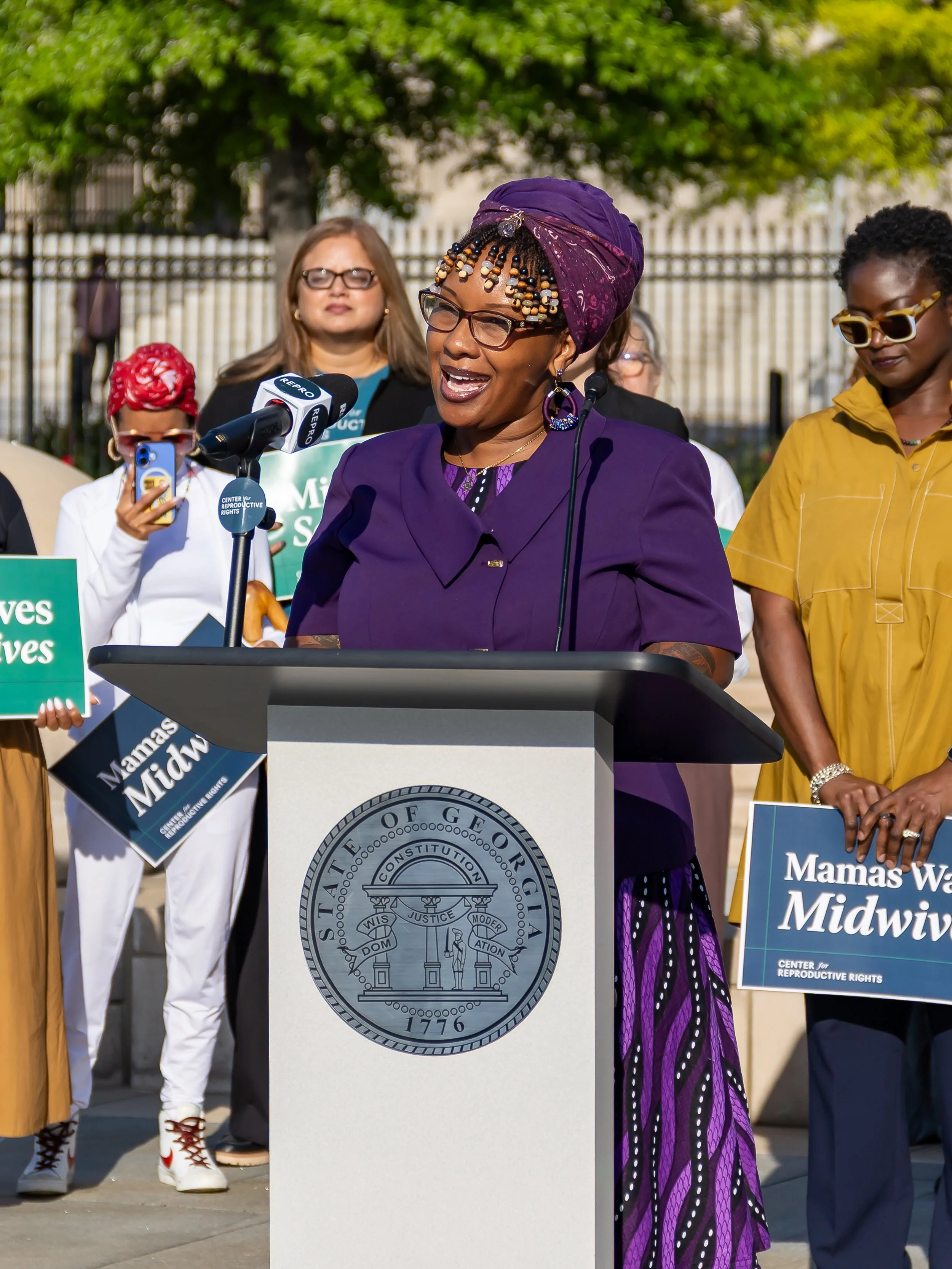
Image: Rosalind Williams Photography
Jamarah Amani initially wanted to practice in Georgia, but moved to Florida to pursue midwifery education and legal practice. Founder of the Southern Birth Justice Network and National Black Midwives Alliance, Jamarah is a nationally recognized birth justice leader. We are grateful to Jamarah for lending her name and excellent reputation in defense of Georgia midwives!
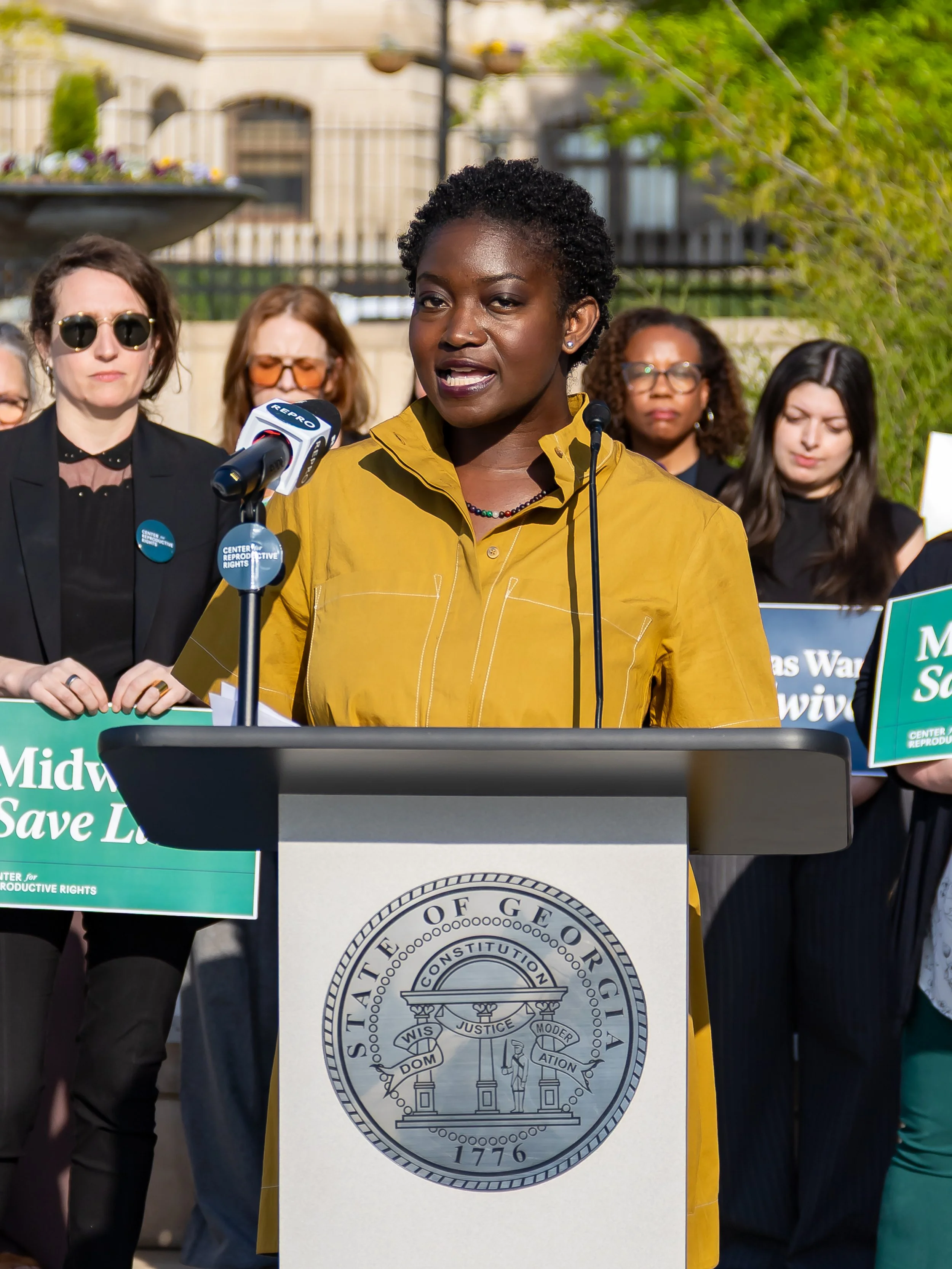
Image: Rosalind Williams Photography
Tamara Taitt is the Executive Director of Atlanta Birth Center and a Florida-Licensed Midwife who currently resides in Georgia. Although she is able to operate a birth center, she cannot practice midwifery. Nationally, 70% of birth centers are staffed by Certified Professional Midwives, who are currently banned from legal practice in Georgia. This has resulted in difficulty staffing birth centers in Georgia. We are grateful to Tamara for advocating for CPMs while also operating the busiest birth center in the state!
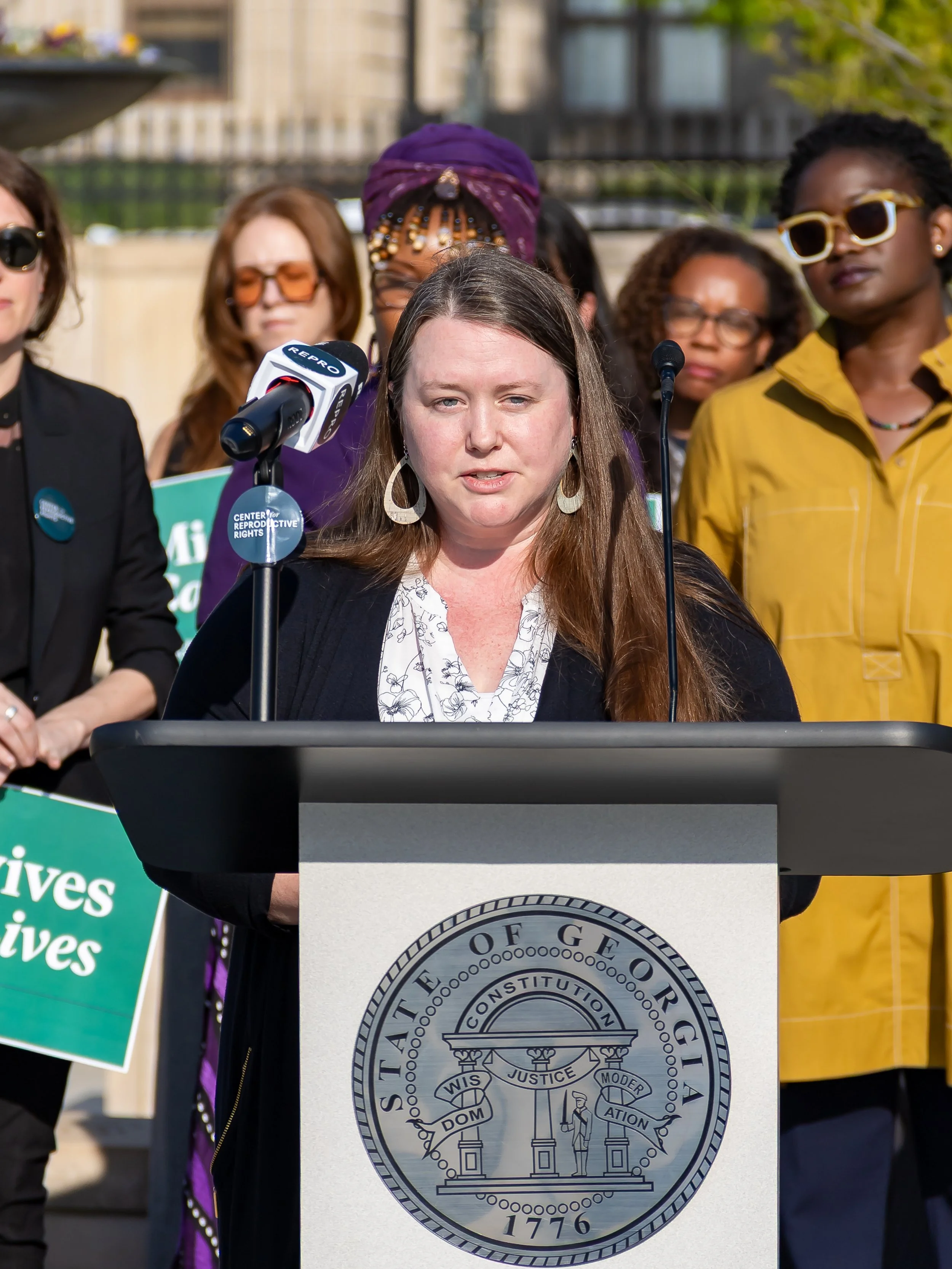
Image: Rosalind Williams Photography
Sarah Stokely is a certified nurse midwife, licensed in the state of Georgia, but unable to practice due to restrictions based on physician protocol agreements. She was unable to find a physician to supervise her at an affordable rate. Sarah currently travels over 4 hours to practice in Tennessee with CPMs in a home birth practice, where she can do so legally. Thank you, Sarah, for fighting for increased access to midwifery care in Georgia!
What happens next?
This law suit complements our legislative work, and it does not replace it. Even if these midwives are the winners, we still need to pass legislation for licensure, amending Georgia’s outdated codes. Even if this lawsuit results in decriminalization, we still need integration. Midwives should be able to participate in perinatal quality collaboratives, have access to affordable education, and receive equitable reimbursement from state and third party insurance providers. Birth centers should be freed from old regulations that make opening a birth center nearly impossible, and should able to use best evidence to guide clinical decisions.
In short: Our work MUST continue!
We need your support.
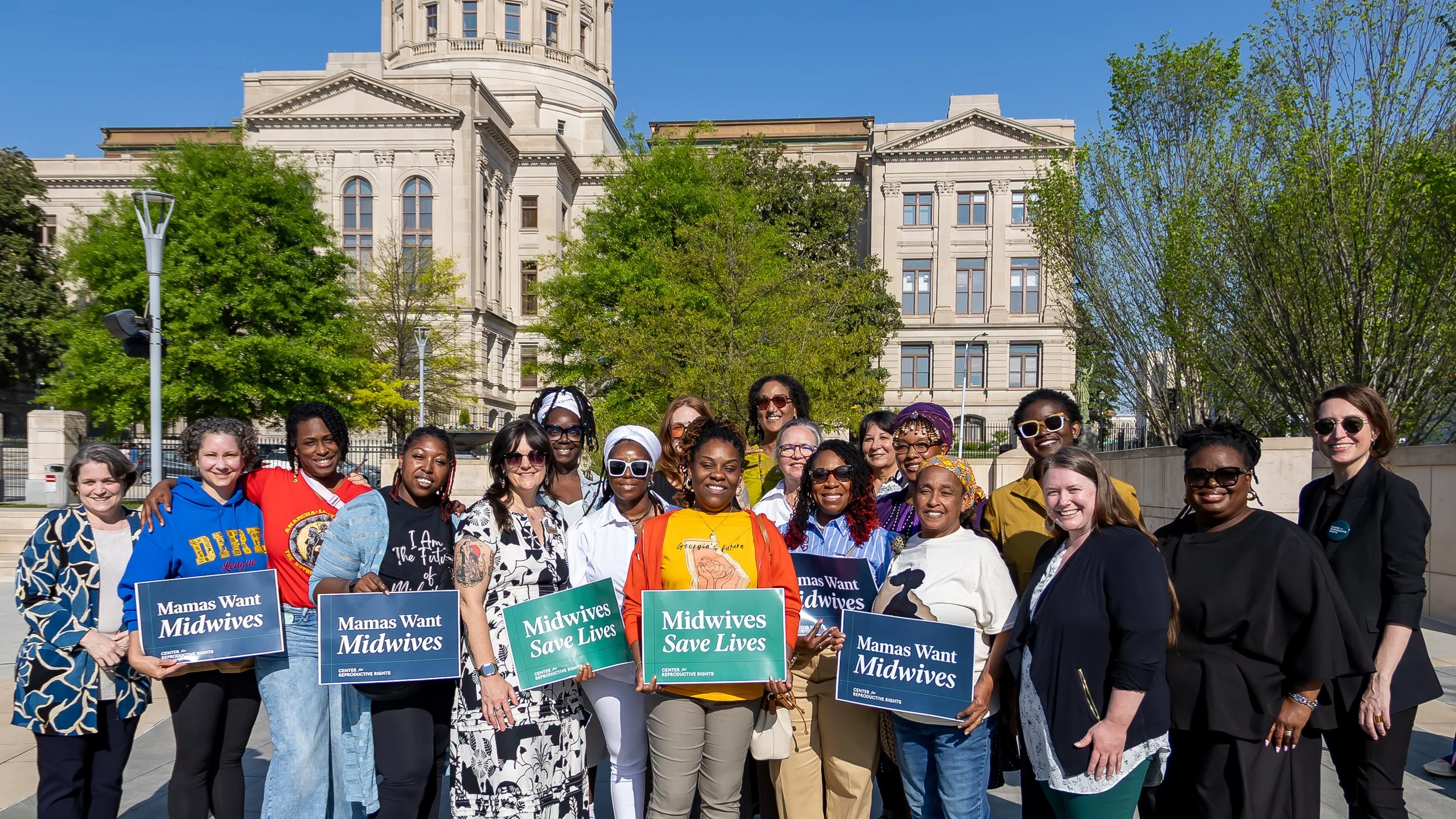
Image: Rosalind Williams Photography