
Georgia Advocates Convene to Chart the Path Forward on Midwifery Access
It's going to take all of us. Last week, more than 30 advocates from 14 organizations gathered in one room with a single, shared conviction: Georgia's mothers and babies can't wait, and no one of us can fix this alone. What follows is a look at the coalition making it happen, and the afternoon policy session that moved us one big step closer to a Georgia where midwifery-led care is within reach of every family.
What is the Georgia Midwifery Access Initiative?
The Georgia Midwifery Access Initiative (GMAI) is our answer to a crisis that has been fought in siloes for far too long. Georgia's maternal health barriers are legislative, financial, educational, and cultural all at once — and they have persisted because the people working to solve them have too often been working alone.
GMAI brings us together. It's a project supported by the Georgia Health Initiative's Maternal Health Vitality Think Tank (MHVTT), with NACPM Georgia serving as the convener, fulfilling our mission to ensure midwifery-led care is accessible to everyone in Georgia through legal midwifery practice, interprofessional collaboration, and workforce development.
The stakes are as clear as they are urgent. 42% of Georgia counties have no hospital-based obstetric provider. By 2019, 93 of 109 rural counties had no hospital labor and delivery unit. Georgia ranks 49th in the nation for midwifery integration — even as demand surges, with intended home births rising 105% between 2016 and 2024. 69% of Black women say they want community-based midwifery care, yet only 0.49% can access it.
We know what works. Midwife-led continuity of care is associated with up to a 60% reduction in maternal and infant mortality, fewer interventions, fewer preterm births, and equal or better safety for low-risk pregnancies — at a fraction of the cost.The infrastructure to provide this high-quality care is missi. This is what GMAI is building: coalition, policy reform, research, and education, working in concert to midwife the system itself.
The Coalition: Who’s building this with us
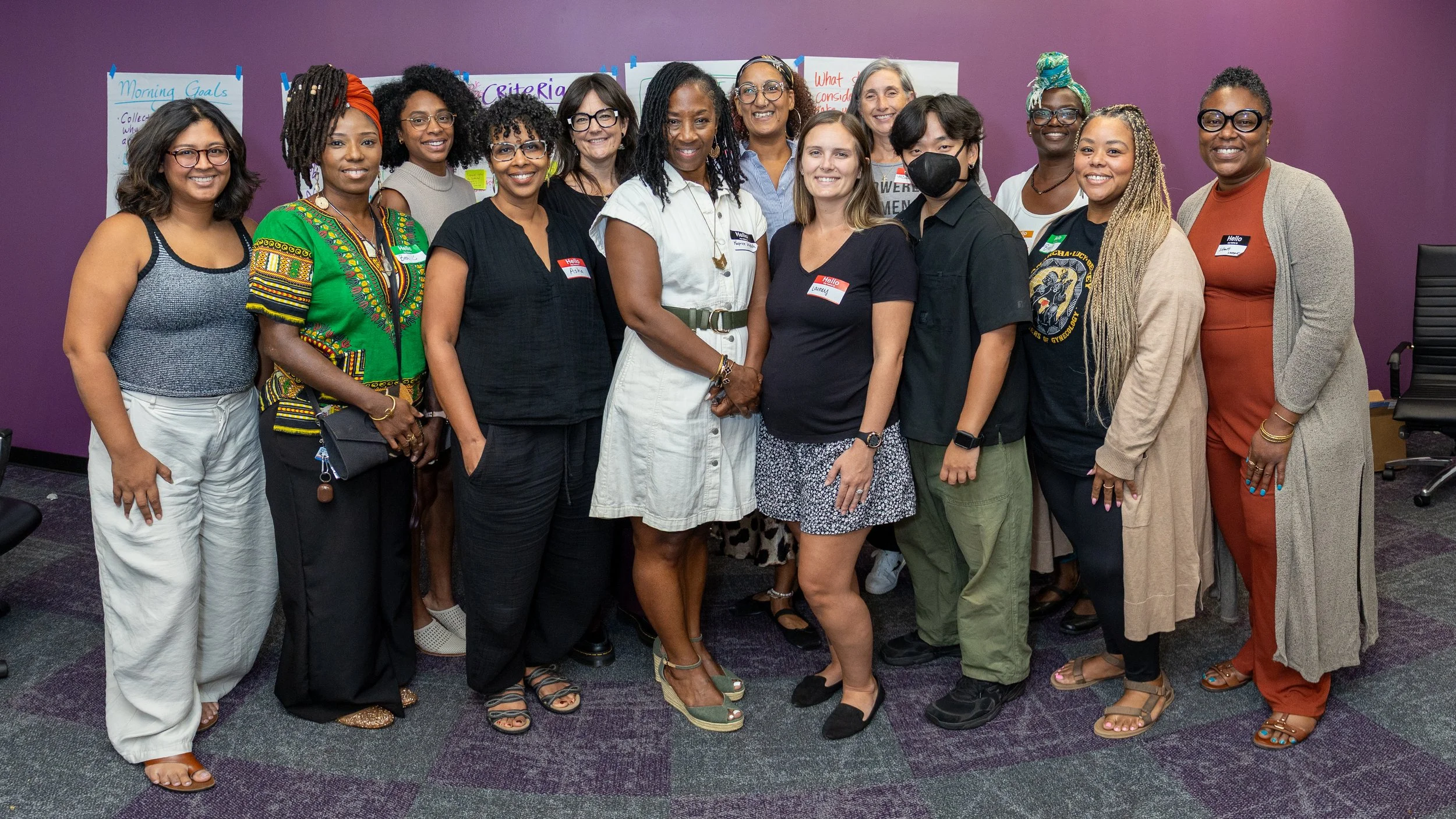
Core Coalition Members: Anjali Sharma, Person with Lived Experience; Bea Williams, Traditional Midwife; Cianna Walker, Person with Lived Experience; Asha Immanuelle, RN; Missi Burgess, CPM, Kaprice Simone, CNM; Piper Lovemore, Traditional Midwife; Lainey Stancil, Person with Lived Experience; Michelle Munroe, CNM; Bex, facilitator; Tamara Taitt, LM-FL; Breana Lipscomb, MPH; Shanti Moore, CNM.
GMAI is powered by a statewide, multi-sector coalition — all pathways to midwifery, reproductive justice advocates, maternal health organizations, consumer coalitions, and people with lived experience, aligned around common ground even where we don't always start out agreeing. Our core coalition members are pictured above and represent these organizations:
Atlanta Birth Center
Black Midwives Over Georgia
Center for Black Women's Wellness
Center for Reproductive Rights
Coastal Georgia Women's Foundation
Georgia Affiliate, American College of Nurse-Midwives (ACNM)
NACPM Georgia
Peach State Birth Coalition
People with Lived Experience
SisterSong
A special thank you to the Center for Black Women's Wellness for opening their doors and holding space for this work. Relationships are everything — and this coalition is proof of what becomes possible when we build them.
The Afternoon Policy Session: Analyzing existing policies to find what fits
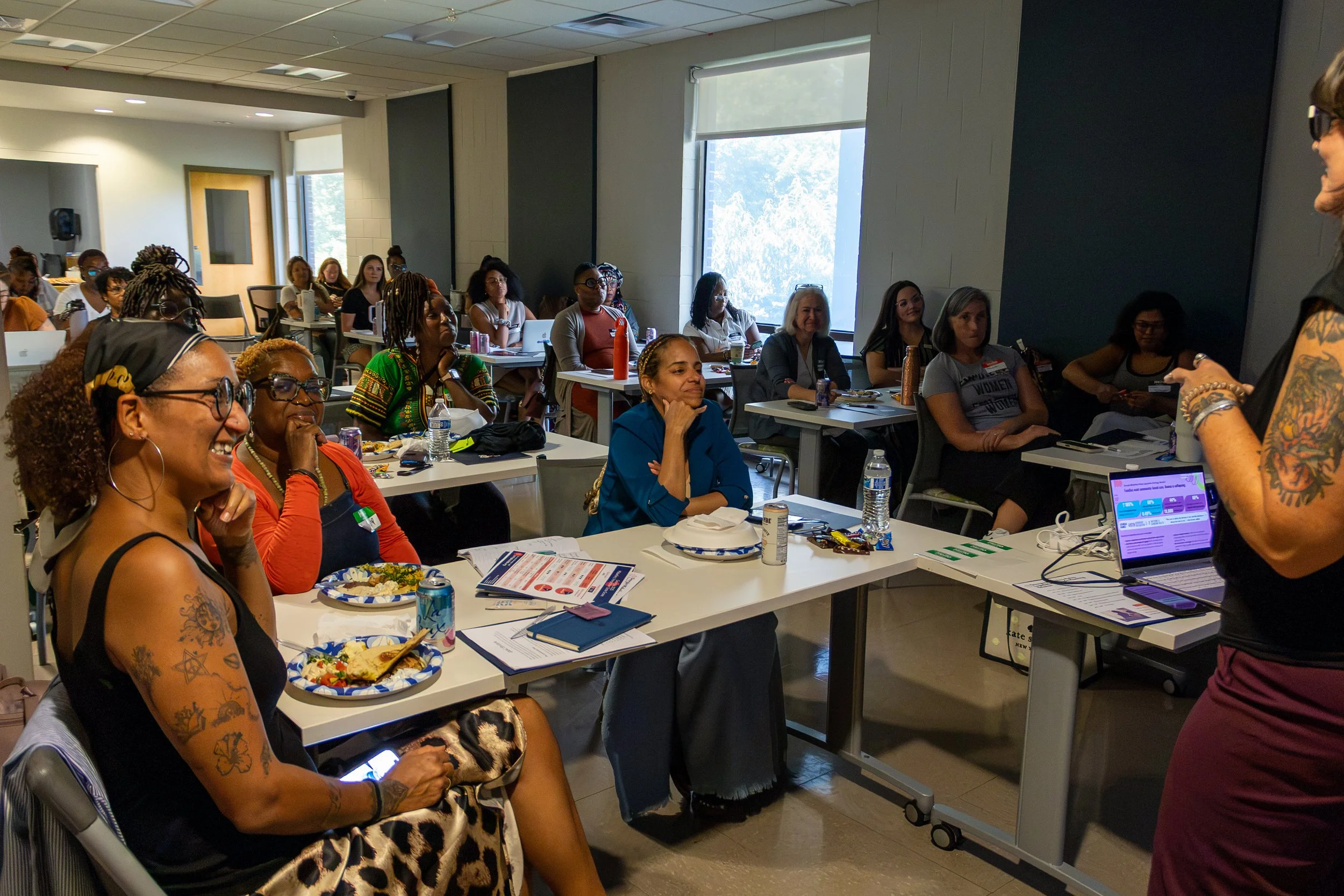
In the afternoon, more than 30 people from 14 organizations rolled up their sleeves and got to work. Around the table sat the policy arms of Georgia's reproductive justice, midwifery, and maternal health organizations — the people who write, shape, and fight for the laws that determine whether a Georgia family can access the care they choose.
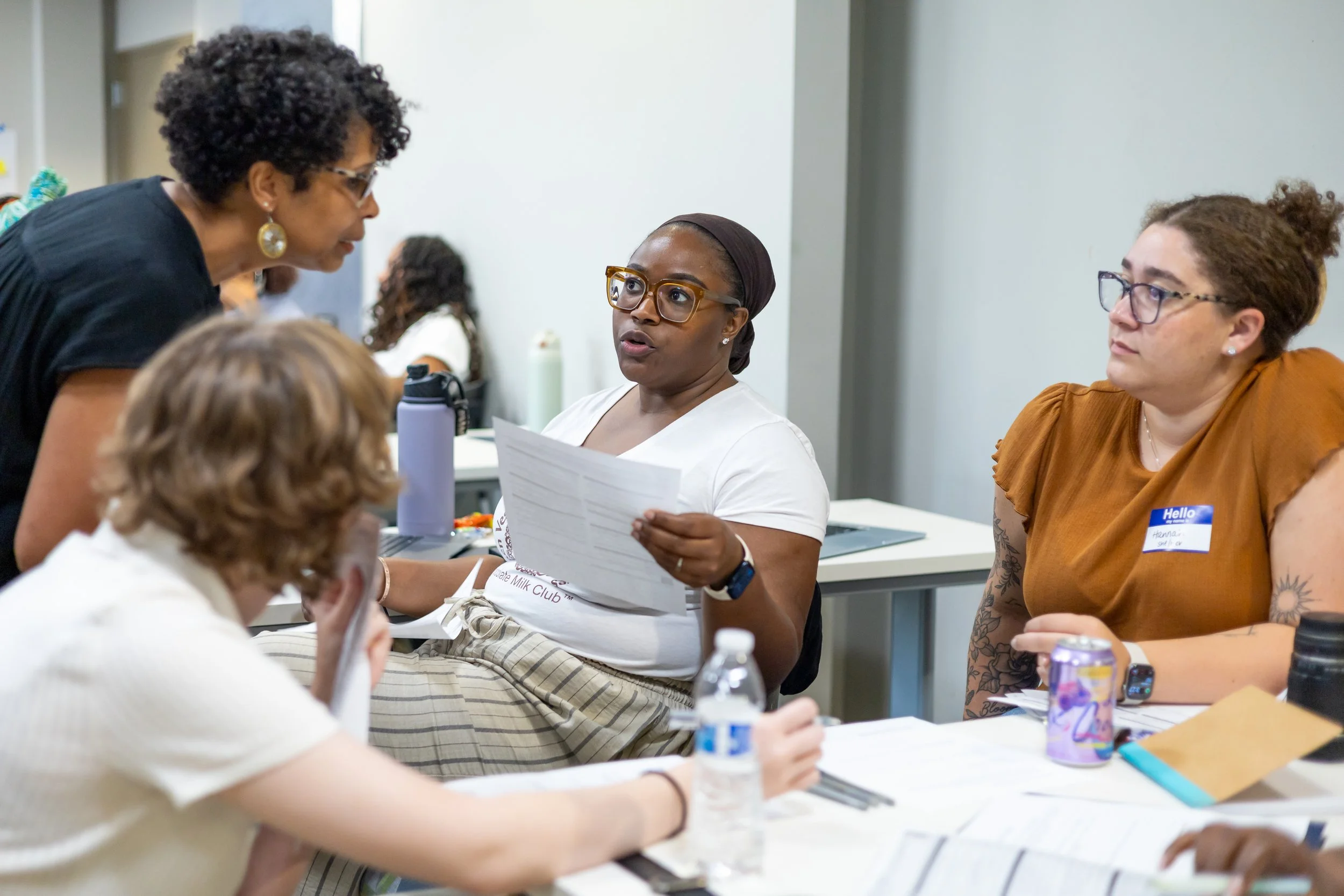
The energy in the room was electric. Advocates were chomping at the bit to find solutions for Georgia. We broke into working groups and dug into the real, on-the-books policies of other states — how they've licensed community-based midwives, how they've made birth centers financially viable, and how they've structured Medicaid reimbursement and practice authority to open doors rather than close them. We analyzed what has worked elsewhere, what pitfalls to avoid, and — most importantly — what a Georgia-grown solution needs to look like.
Our path forward runs through four clear policy pillars:
Midwifery licensure and decriminalization — Licensed certified professional midwives practice in 38 states. Georgia is not yet one of them, and community-based midwives in Georgia have been asking for licensure since 1991. That's 34 years of waiting. We are done waiting. We also know that it is a policy fail if we criminalize traditional midwives, whose practice philosophy hinges on freedom from regulation, so decriminalization of traditional midwives is a protected priority.
Birth center sustainability — so that the places families trust can open their doors and keep them open.
Equitable Medicaid reimbursement — so that access isn't rationed by income.
Full practice authority for Certified Nurse-Midwives — so that Georgia stops leaving trained providers on the sidelines of a workforce crisis.
Watching advocates from organizations that don't always sit at the same table lean over the same policy documents, compare notes, and imagine a better system together — that is exactly what building common ground looks like. This is how movements win.
Where we go from here
We left that room sharper, more aligned, and more determined than when we walked in. The barriers in Georgia are real, and we name them plainly — but every one of them is a barrier we are actively dismantling, together. Moms and babies can't wait, and now, they don't have to wait alone.
There is room for everyone in this work. Whether you can collaborate directly on advocacy, or support the movement through your networks, reach, and communications, we invite you to join us in building Georgia's midwifery infrastructure.
“Let's midwife the system. Honestly, it may be our only hope.” (Amy Romano, CNM)
To get involved, reach out to us at nacpmga@gmail.com
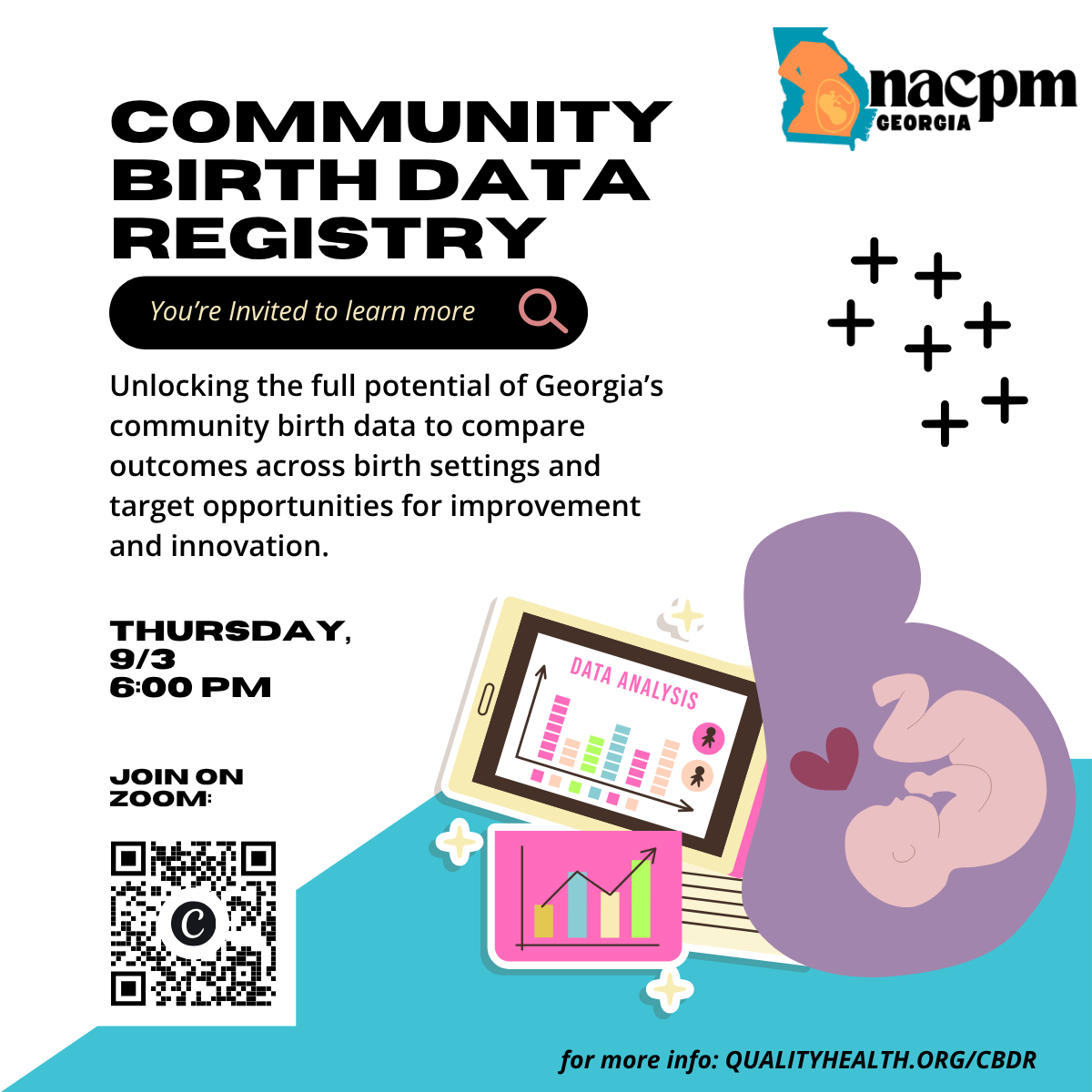
We’ve already gotten started on one of the other arms of GMAI: Data and Quality Improvement.
Join us for a webinar about the CBDR and how it unlocks the full potential of community birth data. Community-based midwives are currently invisible in the conversations that decide funding and policy because our data isn’t collected anywhere.